Latvian city invests in solar district heating

2019-07-23T14:25:41+02:00Nov 14th, 2018|

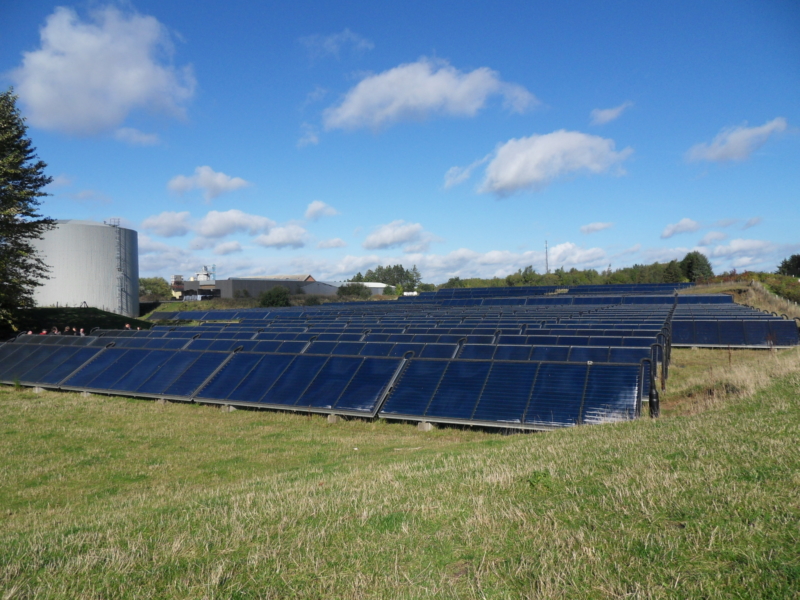
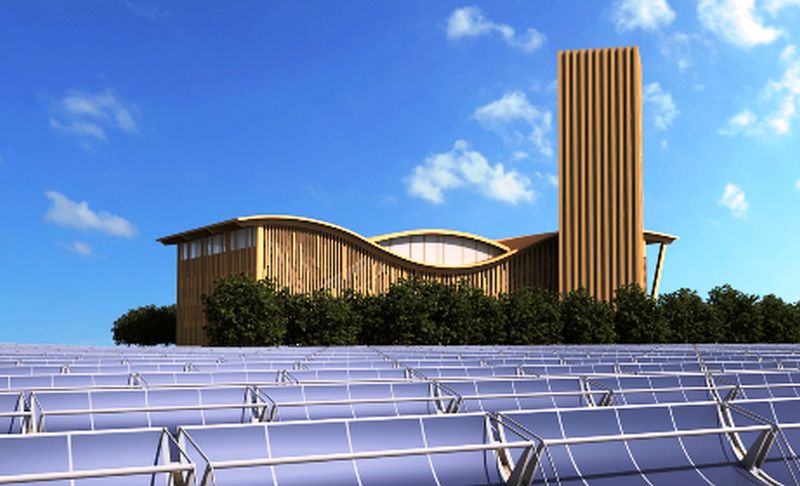
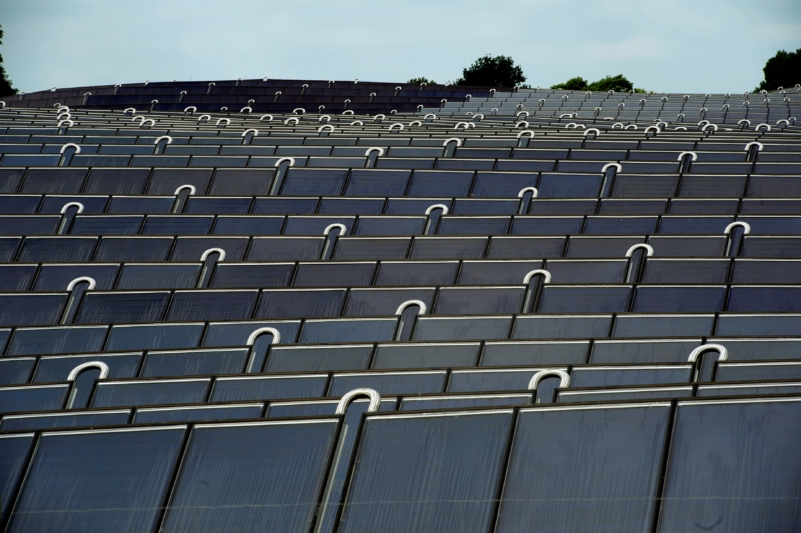
The first half of 2019 will mark the launch of a milestone project on solar district heating in Eastern Europe. The public utility which serves the Latvian town of Salaspils, near Riga, plans to install 21,672 m2 of collector area (15 MWth) to provide heat for its modernised, efficient district heating network.

The solar field will be connected to an 8,000 m3 water storage tank, from which thermal energy will be injected into the network. The project, which will also include a wood-chip boiler with 3 MWth of capacity, had been planned jointly by Arcon-Sunmark, a Danish supplier of solar thermal devices, and Filter, a heating and cooling company based in Latvia. Salaspils Siltums provides 85 % of the town with a population of about 17,000 people with district heat. A 7 MWth wood-chip boiler is currently the main source of 60,000 MWh of thermal energy a year. The plans for the 15 MWth solar system state that it is expected to contribute 12,000 MWh or 20 % of the total at some point between July and September next year. Reportedly, the utility will receive funding from the European Union for buying the system.

“We have been working on this project since we attended a district heating conference in Denmark in 2014. The objective is to reduce our CO2 footprint and become more independent of fossil fuels,” Ina Berzina-Veita, who is a Member of the Board of municipal utility Salaspils Siltums, was quoted as saying in a press release which Arcon-Sunmark sent out in the middle of October.

Over the last years, the utility has optimised its district heating network. It replaced underground pipes with pre-insulated ones and revamped the central boiler. The current supply and return temperatures of 65 °C and 45 °C, respectively, will make for a highly efficient flat plate collector array, the operation of which will be very effective.

Image: Arcon Sunmark

Source: Bärbel Epp
 

Manual on public participation models for solar district heating

2019-07-23T14:08:08+02:00Nov 13th, 2018|

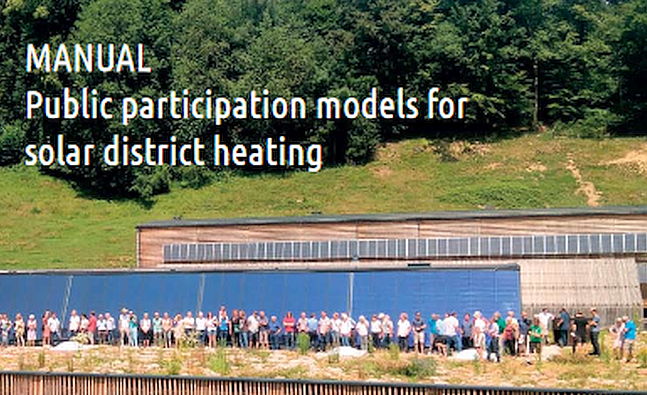
The Austrian federation on solar thermal systems has published a manual on public participation models for solar district heating.

Within the photovoltaic sector it is not uncommon to innitiate public participation in large projects. The now published manual shall support similar projects in the solar thermal sector and was supported through the “Klima- und Energiefonds” project GZ B770444 “K&E Leitprojekt – Bürgerbeteiligungsmodelle für Solare Nahwärme”.

Please click here for the download (the english document can be found at the end of the page).

New knowledge database for solar district heating

2018-10-02T16:34:24+02:00Oct 2nd, 2018|

Under the well-known web address www.solar-district-heating.eu, the partners of the SDHp2m project present a completely renewed information portal for solar district heating. A highlight of the new website is the knowledge database with a lot of sector expertise.

“With the knowledge database, we make available valuable expertise and numerous publications, which we produced in cooperation with national and international partners in more than two decades. It merges the results of the three EU funded SDH projects SDHtake-off, SDHplus and SDHp2m as well as several national projects,” says Thomas Pauschinger from the Steinbeis Research Institute Solites, coordinator of the SDHp2m project. The content of the database extends from information brochures and scientific publications to calculation tools and technical figures for professionals. It is indexed by keywords or can be filtered with full-text search.

The new website is an international and multi-language project with contributions from 25 partners in 13 different countries. Last year an all-time high was reached with 75,000 site visits. “This visitor record is also a clear sign, that the interest in solar district heating is sustainable and steadily increasing,” says Pauschinger, “Used at large-scale, solar thermal is economically feasible, area-efficient and technically mature. This is also the reason, why we find solar thermal as key element in many scientific strategies for the energy transition in Europe.”

With the relaunch, the new website is not only optimized for desktop computers but also easy to use on any mobile device. The relaunch of the website www.solar-district-heating was financed through the Horizon 2020 project SDHp2m and national projects presented on the website.

Support for SDH feasibility studies in Western Balkans

2018-10-02T15:08:16+02:00Oct 2nd, 2018|

The European Bank for Reconstruction and Development is now funding feasibility studies under a programme called Renewable District Energy in the Western Balkans, or ReDEWeB for short. Town and city governments, and project developers, can send applications to the bank’s headquarters in London to receive grants for renewable energy systems at either new or existing district heating plants. In the case of ReDEWeB, renewable district energy systems are defined as producing heat or cold from solar thermal, biomass, biogas, geothermal, waste heat or heat pumps or the sea, lakes or rivers.

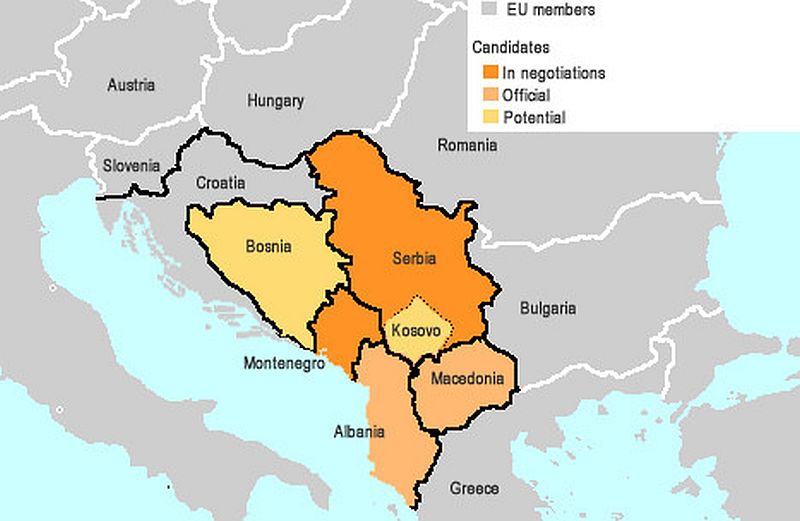
“We really would like to drive the solar thermal agenda forward now, after having realised multiple biomass investments in the Western Balkans and Ukraine and having completed geothermal power projects in Turkey,“ said Greg Gebrail, Principal District Energy Specialist at the headquarters of the European Bank for Reconstruction and Development, or EBRD for short. He added: “There is already a tradition of utilising district heating systems in the Western Balkans, and there is great potential for building or expanding systems based on renewables.” In partnership with the government of Austria, the EBRD has launched the ReDEWeB fund to support the integration of renewables, especially solar thermal, into district energy installations. There are six countries in the Western Balkans, namely Albania, Bosnia and Herzegovina, FYR Macedonia, Kosovo, Montenegro and Serbia. Slovenia and Croatia are already part of the European Commission.

Gebrail has recently posted a job advert for a fund manager position in Belgrade, Serbia, to look for someone who can promote ReDEWeB across the region over the next three years. He or she would be in charge of day-to-day operations, business relations with stakeholders in the partner countries, and marketing events related to ReDEWeB.

The EUR 4 million budget that the Austrian government has allocated for the programme will be used for both technical assistance and small investment grants. Technical assistance involves support for national and local policy initiatives which encourage the adoption or expansion of renewable district energy, as well as for feasibility studies to implement specific projects. Key initiatives and studies will be fully funded by ReDEWeB. “We can also provide small grant subsidies to help with the construction costs of ambitious projects,” said Gebrail.

Those eligible to submit funding requests to the EBRD in London (see contact details below) include city and town governments, public utilities and private sector project developers. The managers of ReDEWeB will work hand in hand with the Energy Community Secretariat, an international body, to expand the EU’s energy market rules and principles into other countries in the Balkans, across the Black Sea region and beyond.

To learn more about ReDEWeB, please contact Greg Gebrail, Principal District Energy Specialist at the EBRD or click for more information here.

Submitted by Bärbel Epp
Map: oscebih.org

How to monitor emerging SDH markets

2018-10-02T16:33:30+02:00Sep 30th, 2018|

A new fact sheet of the SDHp2m project describes how the SDH development, especially in emerging markets, can be monitored over time. It includes recommended information to gather, the process of collecting it and a proposed definition of what to include in the category ‘SDH’.

For monitoring SDH market development, the first point to address is to give an exact definition of a solar district heating plant and also, depending on the market characteristics, a minimum size of the system.

Another key aspect is the amount of information which should be provided and that should be possibly checked with the plant owner and operator. It must include at least: Location, year of commissioning, collector area (aperture or gross) and thermal capacity (in kWth).

Additional details can then include owner of the system, collector type, annual solar yield, type and volume of storage, conventional energy sources used, investment costs, etc.

The new factsheet was elaborated by Daniel Trier from PlanEnergi and is available here.


SDH seminar and study visits in Sweden

2018-10-15T17:20:05+02:00Sep 18th, 2018|

About 70 stakeholders attended a seminar and two study visits targeted at solar block heating plants and hosted by Svensk Solenergi and EKSTA, in Kungsbacka, Sweden, within the SDHp2m project.

The participants represented municipal energy advisers, consultants, solar system contractors, municipal housing and district heating companies.  The seminar comprised presentations about the development of SDH in Europe, an IEA study about the available areas for collector arrays in connection to DH cities and recent Swedish feasibility studies.

Furthermore, the new plant at Ystad Arena (2017) was presented before EKSTA (municipal housing company) ended the seminar with their strategy and experiences related to solar heat as an introduction to the study visits: the solar heated residential area in Vallda Heberg (2013) and the new solar heated multifamily buildings connected to district heating in Tölö Ängar (2018).  EKSTA has extensive experience from solar block heating with more than 10 plants with roof integrated solar collectors in combination with wood pellet boilers, the oldest in operation since the 1980’s.

Text and photo: Jan-Olof Dalenbäck


SDH prefeasibility studies in Bosnia and Croatia

2018-10-02T10:01:21+02:00Sep 14th, 2018|

In early 2016, the EU-funded CoolHeating project began using the know-how acquired during best practice projects in Austria, Denmark and Germany to help with the implementation of small modular renewable heating and cooling grids in southeastern Europe. In mid-March, the CoolHeating partners published seven prefeasibility studies of district heating and cooling across five municipalities in Bosnia and Herzegovina, Croatia, Macedonia, Serbia and Slovenia. Because of geographical features, most projects favoured biomass, but solar thermal does play a crucial role in the proposals created for the Bosnian town of Visoko (see map) and the Croatian city of Ozalj. 

“In the Balkans, renewable energy projects have yet to become as commonplace as in central and western Europe,” said Dominik Rutz, Project Manager of CoolHeating at Munich-based WIP Renewable Energies. In Austria, Denmark and Germany, several operators have already integrated solar thermal or wood chips, or both, into their DHC networks while the market in southeastern Europe is still in its infancy. “In cooperation with local CoolHeating partners, we’ve tailored the systems to the geographical, meteorological, technical and economic potential of each site,” Rutz explained. It was for this reason that the studies of all seven sites in the five communities were drafted individually, resulting in distinctly different installations.

Visoko: Average heat price of 45 EUR/MWh, no connection charges

In Visoko, in Bosnia, the SDH system would consist of a 5,000 m² collector field and 13,500 m³ of seasonal pit storage. Along with 6.3 MW of water-to-water heat pumps, this system would meet the baseload of a new network. A 3.1 MW gas boiler would provide backup at peak demand and an 800 kWp PV generator would supply solar-sourced electricity. The authors of the prefeasibility study based their calculations on a connection rate of 100 % regarding public buildings and 80 % in the case of single-family houses.

Turnover would come from the sale of thermal energy and solar electricity, with the former contributing 88 % and the latter 12 % to the overall amount. The base price proposed for heat supply was 45 EUR/MWh. There would be no charge for connecting to the network, but it has been suggested that each customer should be required by contract to buy at least 3,500 kWh per year. Implementing the idea would mean that, over a maximum of 10 years, heat consumers would have to pay 51.13 EUR/MWh for each year they fail to fulfil the requirement.

Ozalj: EUR 21.6 million for biomass-solar DH system

In Ozalj, amidst a sea of trees, the global horizontal irradiation exceeds 1,200 kWh/m²/a, making the town particularly suitable for a system combining biomass and solar. The study’s authors suggested a 10 MWth biomass-fired CHP unit, an 18,000 m² collector field and 20,000 m³ of seasonal pit heat storage, plus a 26 MW gas boiler for peak loads. There was enough space to set up the installation close to the city’s industrial area, they stated.

The EUR 21.6 million system would be feasible if calculated at consumer prices of 70 EUR/MWh for heat and power. The business plan put the internal rate of return at 12 % and the payback period at 9.7 years, based on a 15-year simulation.

Until the end of this year, the preliminary project proposals need to be finalised, after which it will be up to the mayors and city councils to implement them. Provided they have or can get a solid funding base to invite tenders, those projects could also be of interest to solar thermal companies in western Europe. Rutz is hoping for many to be realised, as each implemented project could serve as a showcase to promote small, modular renewable heating and cooling grids in the Balkans.

Source: CoolHeating
Text: Frank Stier, Sofia

On-site collector testing: new standard in development

2018-10-02T10:02:51+02:00Sep 14th, 2018|

Once a large solar field is set up at its designated location, what tests can be conducted to show that it performs as expected? Soon, the IEA Solar Heating & Cooling Programme may have an answer to this question, as it is working on internationalising Denmark’s testing procedure. No decision has been made on whether the procedure will become part of a full-fledged standard or be turned into a technical specification.

Two tasks of the IEA Solar Heating & Cooling Programme have been involved in drafting a proposal for a new ISO standard to cover solar energy, collector fields and performance testing: Task 55 ,Towards the Integration of Large SHC Systems into District Heating and Cooling Networks, and Task 57, Solar Standards and Certification.

Jan Erik Nielsen, who works at PlanEnergi, a Danish consultancy, and has his own firm called SolarKey, has been in charge of exploring the possibility of designing a new standard, mainly based on three sources:

  • The collector test methods described in the recently published ISO 9806:2017
  • Performance guarantee – Collector field power output, a fact sheet created by Task 45, Large Systems: Large Solar Heating and Cooling Systems, Seasonal Storage, Heat Pumps
  • Yield data from the long-term operation of large solar thermal fields in Denmark (see http://www.solvarmedata.dk)

Is a new standard coming? In October and December 2017, basic ideas for a new standard were presented during ISO and CEN technical committee meetings. The CEN committee’s subsequent vote on a rough draft showed that the proposal should not be viewed as a guarantee but rather a performance test and that it will be turned into a technical specification and not a full-blown standard. In regard to ISO, it has yet to be made clear whether it will become a technical specification or a standard. The ISO committee is awaiting a new draft and will come to a decision at its next meeting in September 2018.

Full article on Solarthermalworld
Text and Foto: Riccardo Battisti

First Spanish solar district heating system for 12,000 families

2018-10-02T09:27:38+02:00Sep 14th, 2018|

In February 2018, Alcalá Ecoenergías signed a deal to construct a district heating system powered by solar and biomass in Alcalá de Henares, a city in Spain. The agreement between the local company and the municipal government will lead to one of the country’s first-ever large-scale solar district heating systems for supplying 12,000 homes with renewable heat.

The 38 million Euro investment, of which 32 million Euro have been allocated for biomass and 6 million Euro for solar thermal, near Spain’s capital of Madrid is expected to be completed by late 2019. Several other solar district heating projects are under development.

Full article on Solarthermalworld
Text: Alejandro Diego Rosell

SDH plant awarded in Sweden

2018-10-15T17:25:09+02:00Apr 25th, 2018|

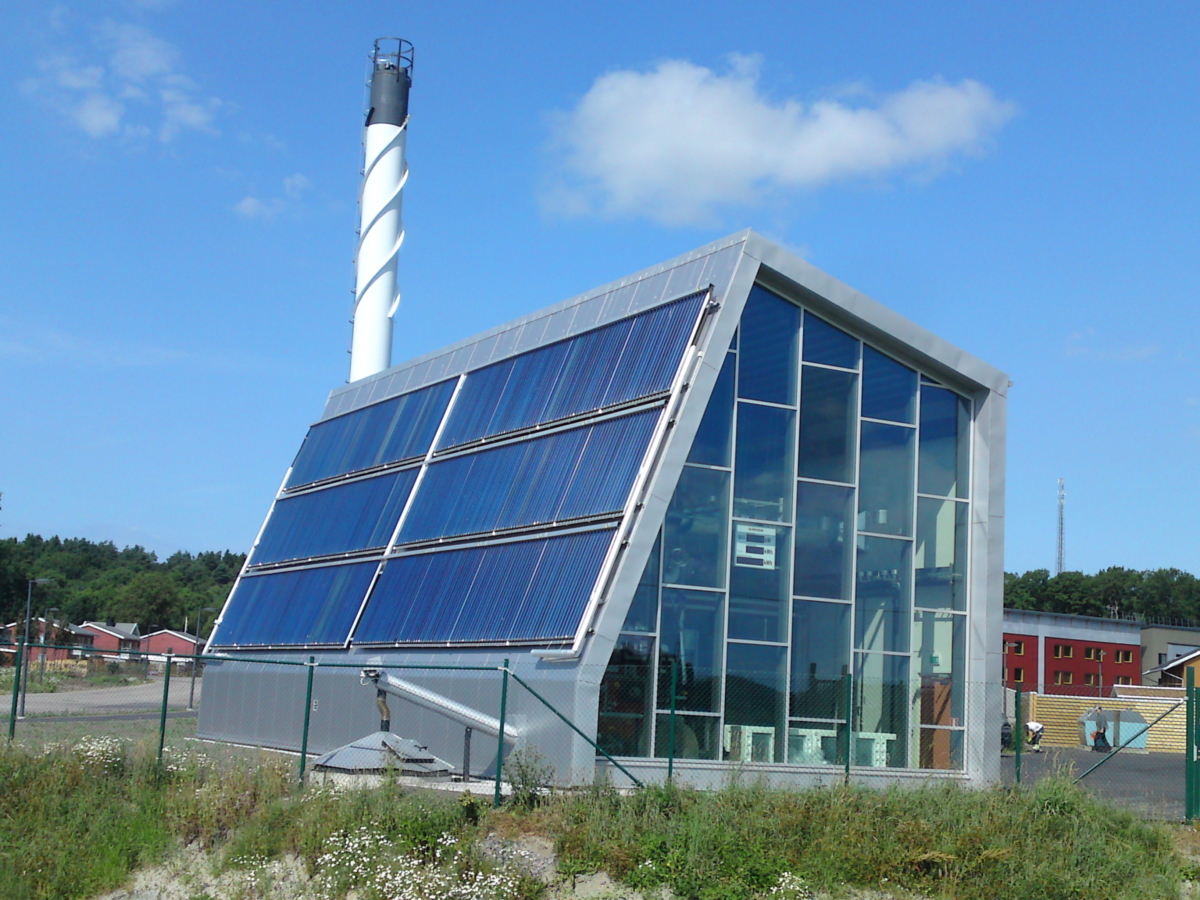
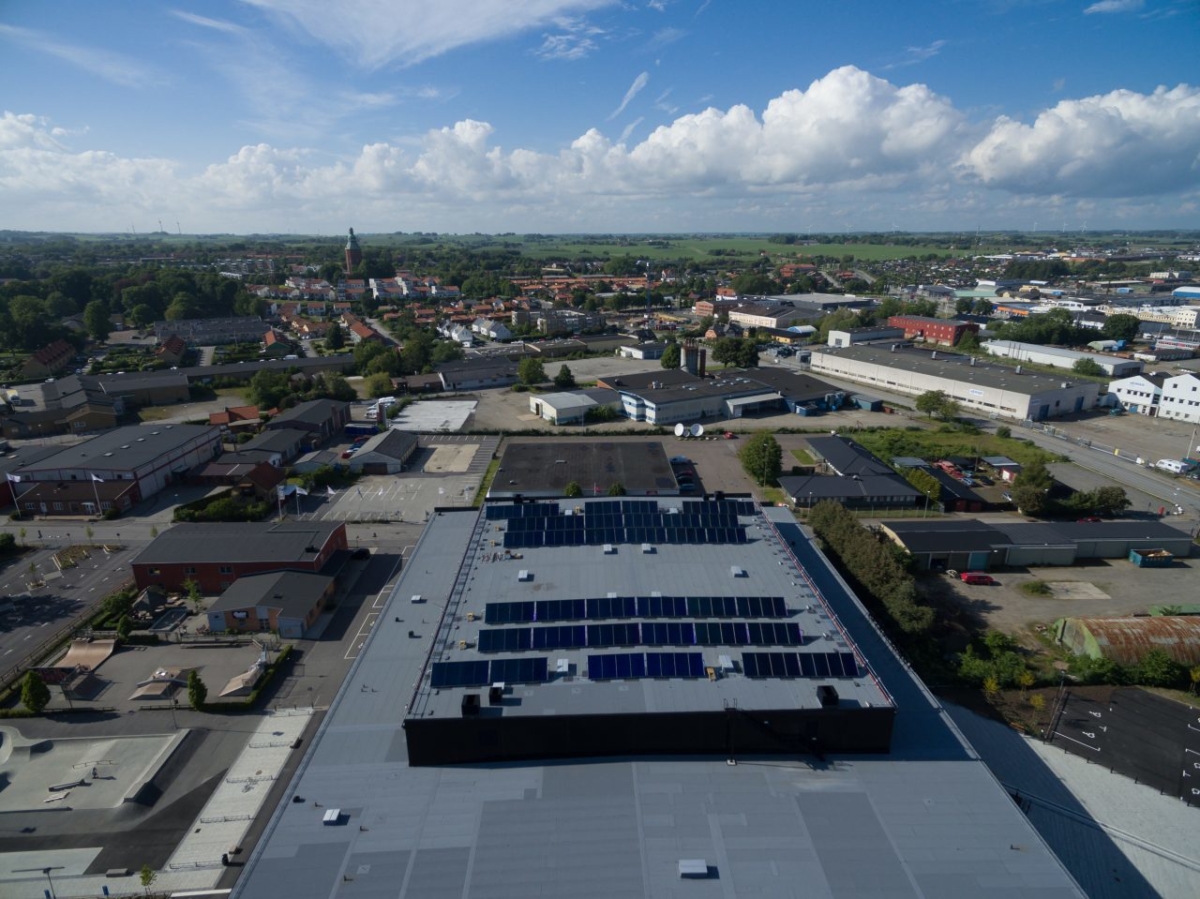
Ystad Energi was awarded the “Solar prize” for their solar heating plant on Ystad Arena. The plant, with just more than 500 m2 of flat plate collectors, is designed to feed solar heat into Ystad district heating system.

The solar plant on Ystad Arena is connected to the primary district heat distribution system via heat exchangers.  When the solar collectors generate more heat than needed in the Arena, the solar heat will automatically be used in adjacent buildings via the district heating system, in a similar way as electricity is used in a grid-connected solar PV plant. There are already about 25 systems with 200 to 1 000 m2 of solar collectors connected in a similar way during the period from 2000 to 2017.

Svensk Solenergi (Solar Energy Association of Sweden) has awarded good example solar (heat and PV) plants and important achievements in solar energy since 2004.  The plant award 2018 was given to Ystad Energi (municipal DH company) thanks to a new system design with improved controls and performance. The new plant in Ystad is thus an inspiring good example for other building owners and district heating companies.

The Award motivation: ”Solar heating plants can be connected in our district heating systems just like solar PV plants are connected in our electric grids.  The systems have been developed so that the generated solar heat can be used to improve a district heated buildings energy performance (according to EPBD) and /or so that the generated heat can be sold to other district heating customers.  The plant at Ystad Arena, built without financial support, is an excellent example of how solar heat can be used in district heating systems – in a national, as well as an international, context.”

Photo: SavoSolar

Go to Top